

The 4 Wonder Ingredients of Hokkien Cuisine
Discover the 4 iconic Hokkien cuisine ingredients that will surprise your tastebuds!
Discover the authentic in Asian cuisine food
Around the World, Asian Pantry
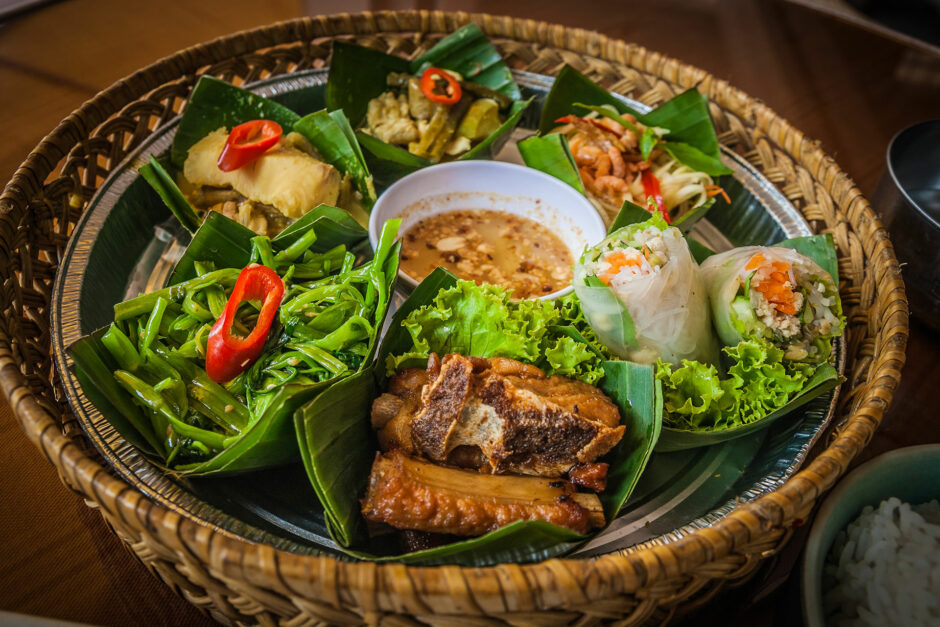
Travelling foodies may describe Cambodian cuisine as similar to its neighbours. While this is somewhat true in part due to the ingredients common to the central regions of Southeast Asia, Cambodian cuisine actually has a uniquely intricate taste palette that combines sweet, salty, pungent, spicy and sour flavours to very different and scrumptious effects. Perhaps most notably, in the uses of Prahok and Kroeung to enrich Cambodian dishes.
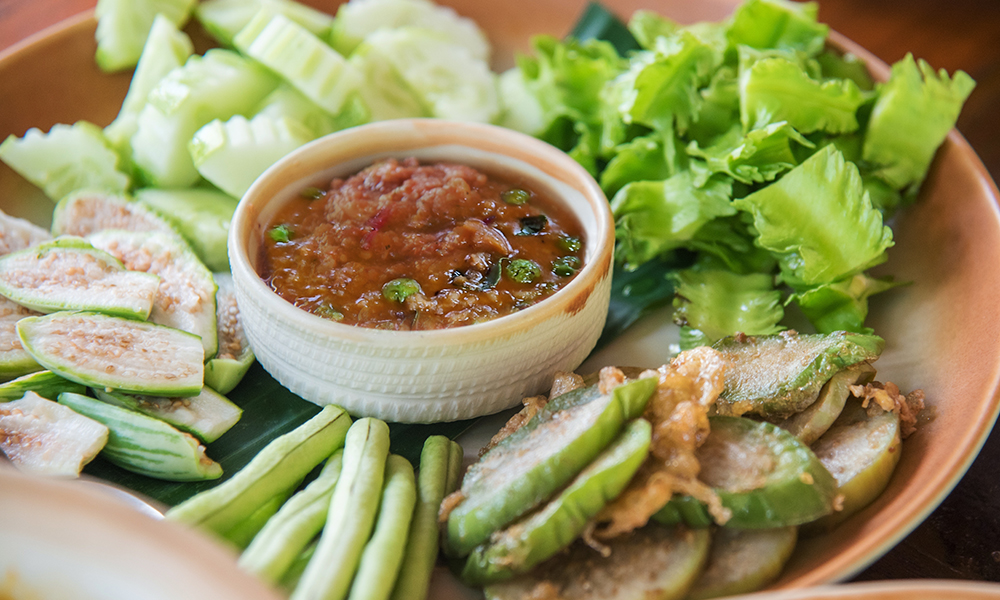
Prahok is a fermented fish paste used since ancient times, and remains quintessential to Cambodian cuisine today. Enjoyed as a protein source with rice in rural Cambodia for its intensely savoury and pungent cheese-like taste. Prahok is also a flavouring ingredient along with fish sauce for meaty dishes, soups, curries, dipping sauces and condiments. However, Prahok is less commonly found in touristy locales, as it is an acquired taste for newcomers to Cambodian cuisine.
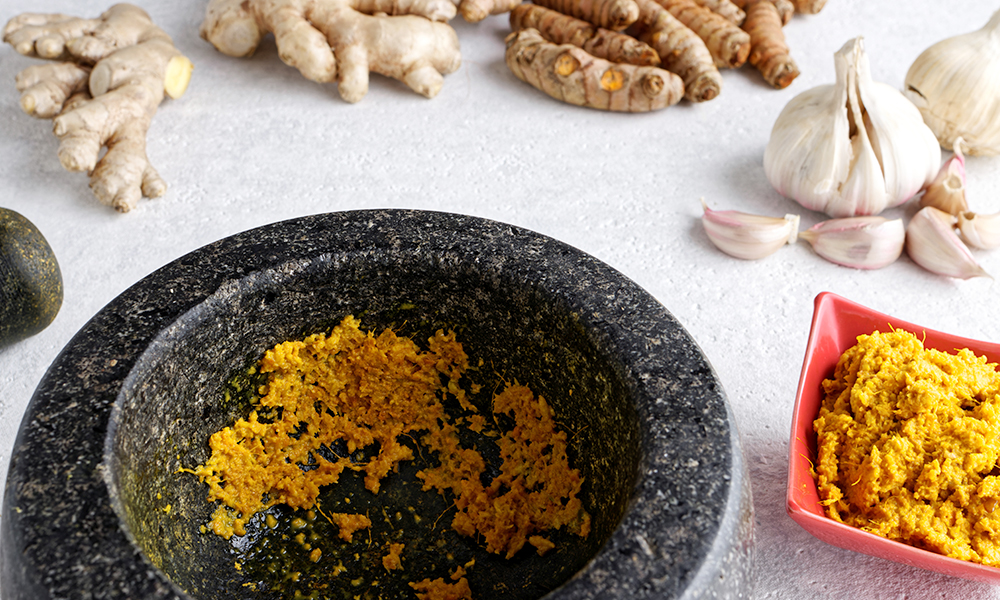
Kroeung is the term for mortar-and-pestle blended spice pastes in Cambodian cuisine. Influenced by regional and historic trade routes including Indian cuisine and is made with Southeast Asian herbs and spices. There’s a myriad of Kroeung pastes for a variety of flavouring purposes, though they’re generally specified into 2 categories: Royal Kroeung and Individual Kroeung.
As the name implies, Royal Kroeung is spice pastes to make more lavish delicacies and features extra aromatic ingredients like coriander and kaffir lime leaves. Meanwhile, Individual Kroeung would feature ingredients unique to individual dishes, most commonly used in Cambodian curries.
These 2 categories are further divided into Red, Green and Yellow Kroeung.
Red Kroeung gets its vibrant crimson hue from the dried red chilli, blended with lemongrass stalk, turmeric, shallot, galangal, and garlic. But despite its fiery colour, Red Kroeung exudes an earthly, sweet-sour and savoury richness with a mild spicy note.
Green Kroeung goes heavier on the lemongrass leaves in its blend with galangal, turmeric and cinnamon, resulting in a strong herbaceous aroma and citrusy flavour. Used in marinades for grilled meats, in refreshing soups, and sometimes incorporated into dipping sauces for vegetable dishes with rice. Some Cambodian recipes may add Prahok to Green Kroeung for an extra bold savoury flavour.
Yellow Kroeung is the most common spice paste in everyday Cambodian dishes, with turmeric as the star ingredient for the sunny colour and emphasis on warm, earthy aroma. Blended with lemongrass stalks, galangal, garlic and shallot for a citrusy, refreshing zest. May also sometimes feature tamarind for a sour boost.
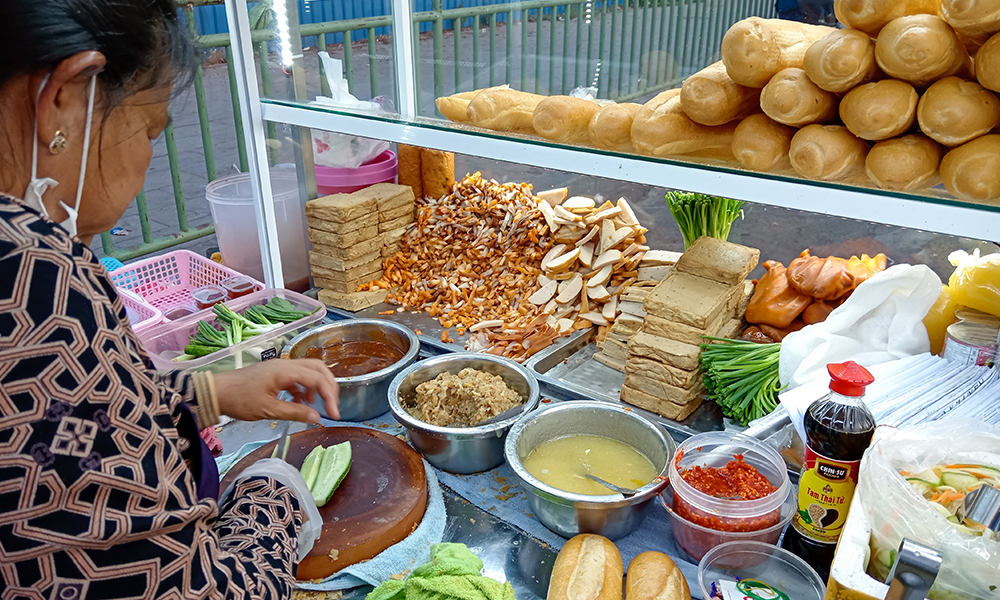
Besides the herbs and spices mentioned above, Cambodian cuisine also regularly uses star anise, cloves, cardamom, mint, sweet basil leaves, foraged local herbs and plants, a unique rice paddy herb called Ma-om, as well as the renowned Kampot peppercorns that give dishes a bold zesty aroma and lingering warmth.
Rice and noodles are the common Cambodian carbs, as well as baguettes (num pang), which are similar to Vietnamese Bánh mì. Beef, pork, poultry and the abundance of freshwater and saltwater seafood from the Mekong River and local waters make up the core proteins of Cambodian meal dishes. Also essential in Cambodian cuisine are the fresh local fruits and vegetables, including coconut, banana, mango, durian, lychee, jackfruit, water spinach, bitter melon, long beans and many more.
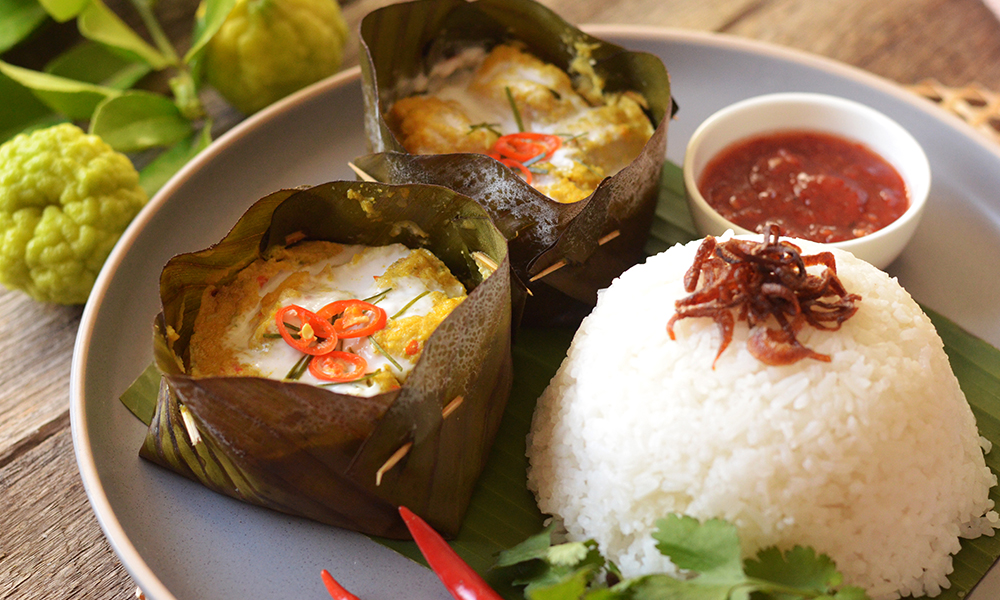
Amok Trey is the Cambodian national dish. A melt-in-your-mouth steamed fish curry made with Yellow Kroeung and creamified with coconut milk, served in banana-leaf cups and enjoyed with rice. Sumptuous and savoury with a perky spicy note that excites and pleasures your senses. Come check out our step-by-step recipe to savour your own Amok Trey at home!
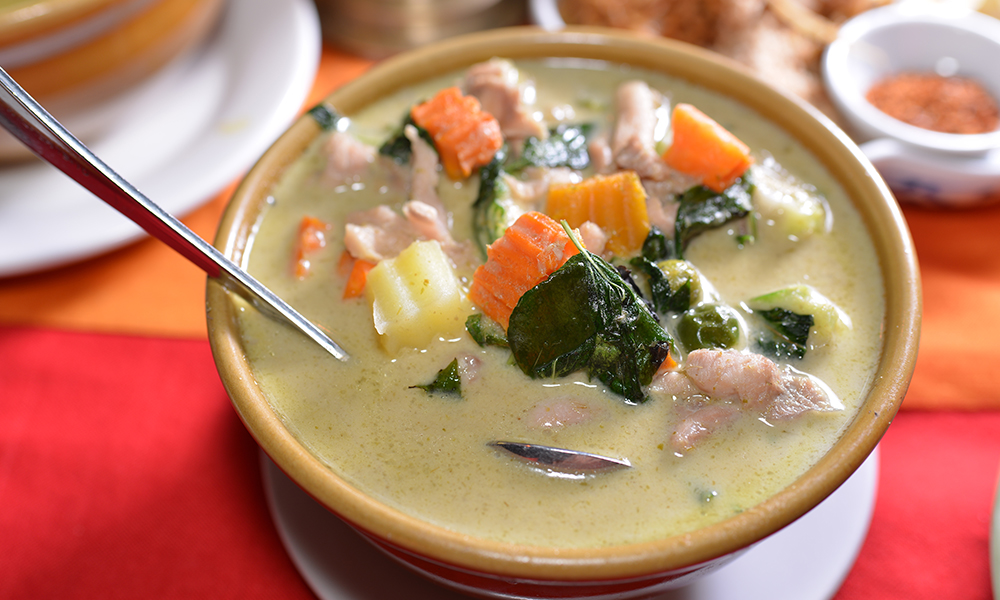
Sour, citrusy flavours and aromas are a hallmark of Cambodian cuisine, exemplified by the sour soups collectively known as Samlar Machu. Pork, beef, fish, chicken, crab and even lobster may be featured in a Samlar Machu soup. Accompanied by leafy greens, and lushly flavoured with tamarind, kaffir lime juice, tomatoes and sometimes even pineapples. Prahok and Kroeung are also common ingredients to give a Samlar Manchu that special Cambodian savoury boldness and rich aroma.
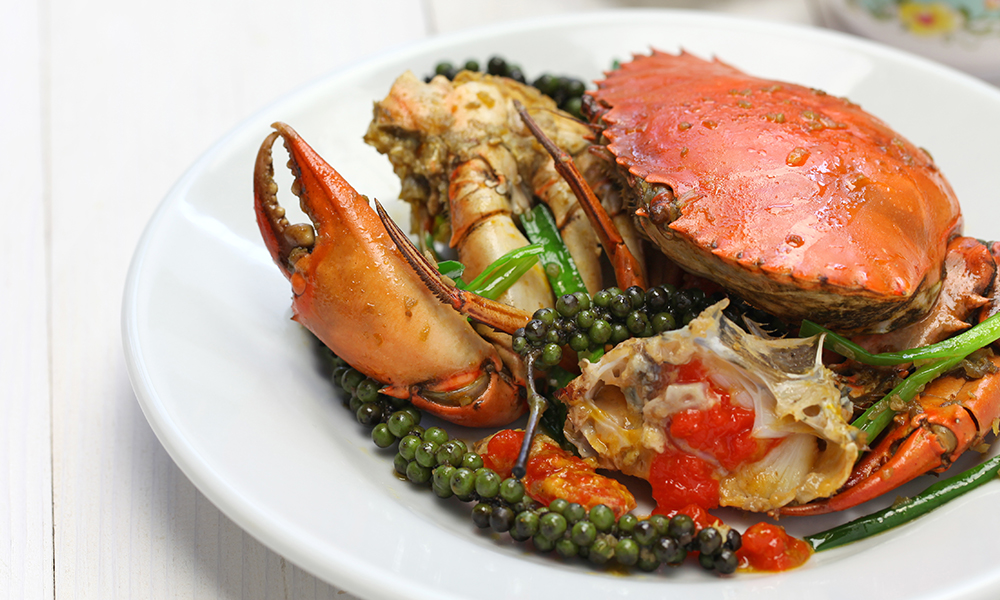
From the Cambodian province of the same name, the Kampot Pepper Crab is renowned for the fresh and succulent stir-fried crab imbued with the potent Kampot green peppercorn zest, as well as savoury fish sauce, fragrant garlic and spring onions with a pinch of palm sugar to smoothen the heat. An absolute must-try for seafood lovers!
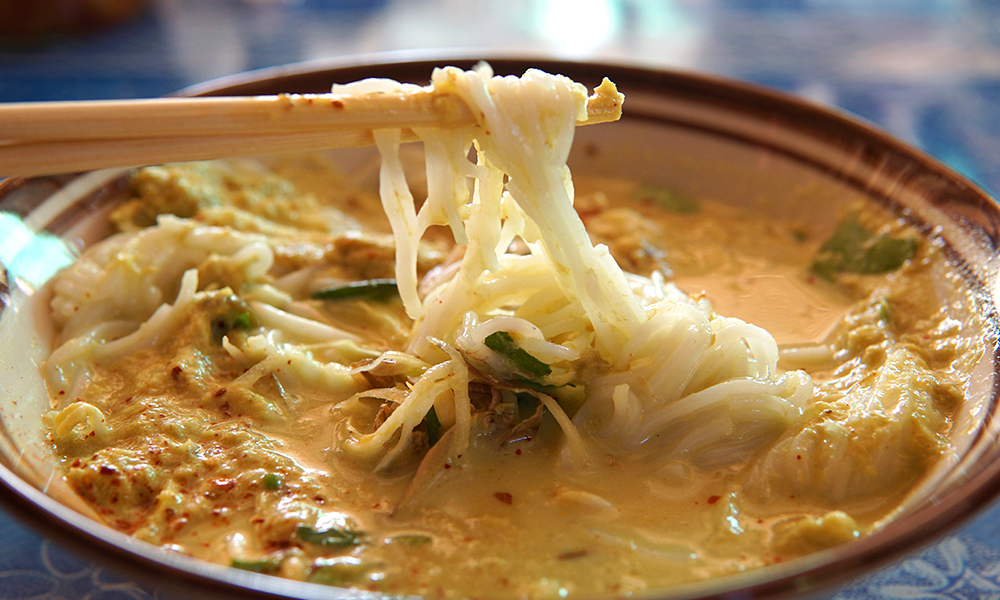
Nom Banh Chok is a fermented rice noodle made from soaked rice, pulverised and pasted, then boiled and extruded into its springy strands. Lathered in a creamy-thick gravy with simmered freshwater fish, flavoured with lemongrass, kaffir lime leaf, turmeric, galangal and coconut milk. Garnished with cucumber, edible flowers, and mint or basil leaves. Appetisingly savoury with a citrusy thrill and herbaceous aroma, Nom Banh Chok is beloved as a refreshing and tasty one-bowl Cambodian breakfast.
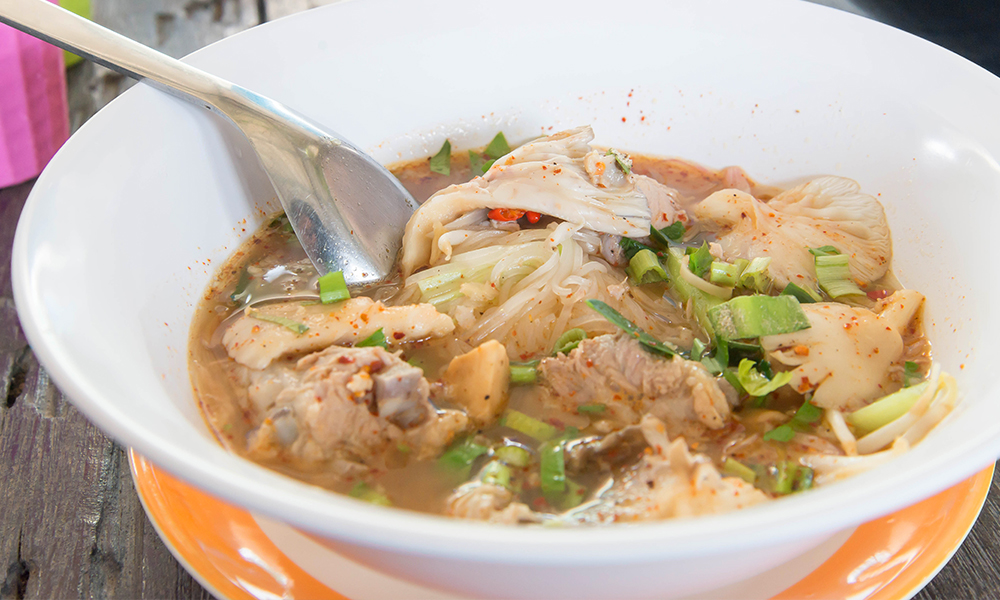
Another popular Cambodian breakfast is the Kuy Teav. A flat rice noodle soup with beef or pork bone broth, inspired by Chinese Teochew cuisine and adapted to the bold Cambodian taste palate. Topped with scrumptious pork balls, beef balls, or minced meat. Garnished with fragrant fried shallots, spring onion, and crunchy blanched bean sprouts. A yummy, satiating slurp to start your day!
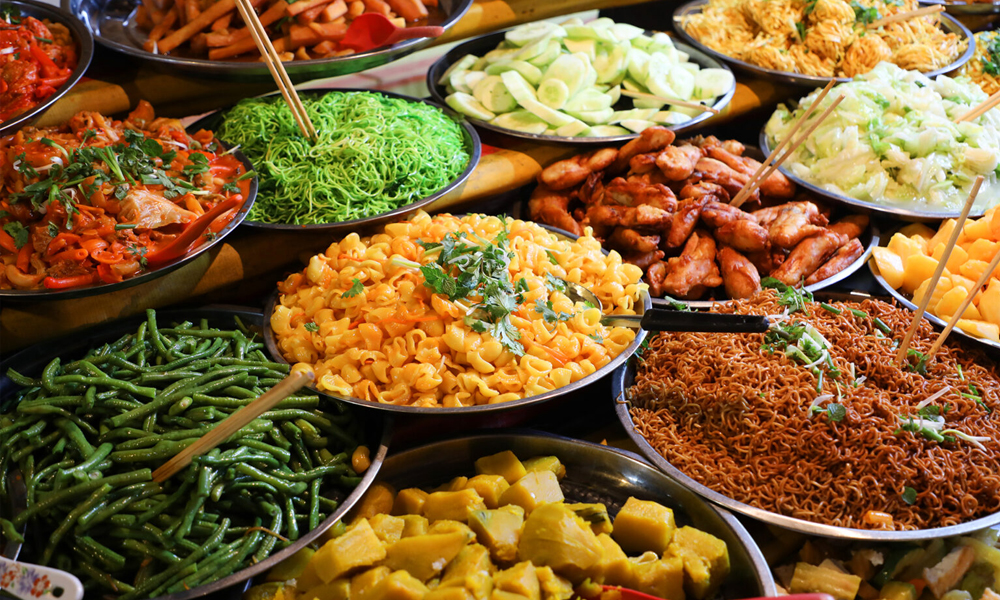
Cambodian cuisine is among the less talked about Southeast Asian cuisines with a unique taste experience and marvellous specials that deserve more foodie love. Also check out our introduction to Filipino, Lao and Myanmar cuisines!
Discover the 4 iconic Hokkien cuisine ingredients that will surprise your tastebuds!
Discover the rich and delectable love of comforting, savoury soups in Cantonese cuisine.
Burmese or Myanmar cuisine is among the most interesting, soulful and uniquely tasty Southeast Asian cuisines. Come learn more about it!