
Introducing the Complex & Delicious Flavours of Cambodian Cuisine
New to Cambodian cuisine? Let’s explore the bold, rich and complex flavours that make Cambodian cuisine uniquely yummy!
Discover the authentic in Asian cuisine food
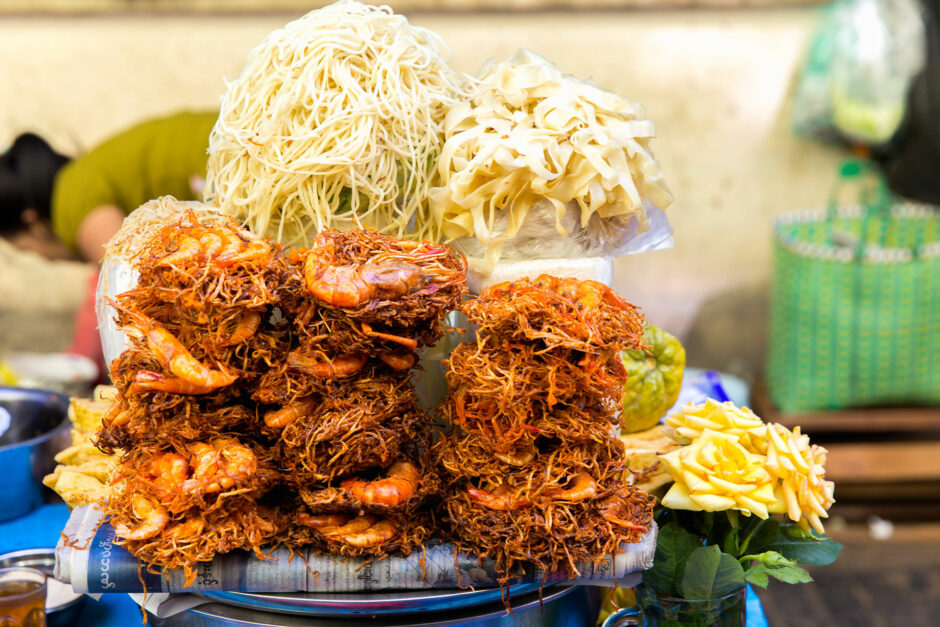
Between Yunnan, Southern China, Bangladesh, Laos and Thailand stands the nation of Myanmar, formerly known as Burma. The largest country by landmass in mainland Southeast Asia. Home to about 55 million people and over 100 ethnic groups, with a diversity of faiths and customs, as well as a gastronomic tapestry of flavours from the north to the south, and a shared food culture and tradition that makes every meal a soulful experience.
Let’s learn more about Myanmar cuisine with some fascinating general facts!
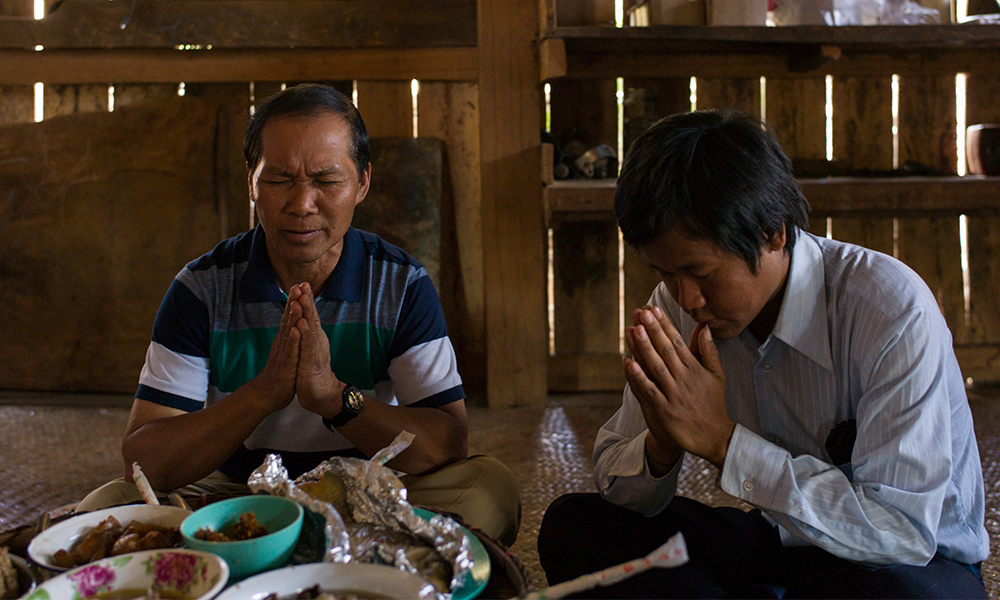
The common Myanmar dining table named “daunglan” is typically round and low, and everyone sits around it on comfy woven mats for shared family meals. The relaxed and intimate atmosphere is most cherished. Elders would take their seats at the head of the table and be served first. If they’re absent, the first scoop of rice from the pot is put aside to remember and honour them.
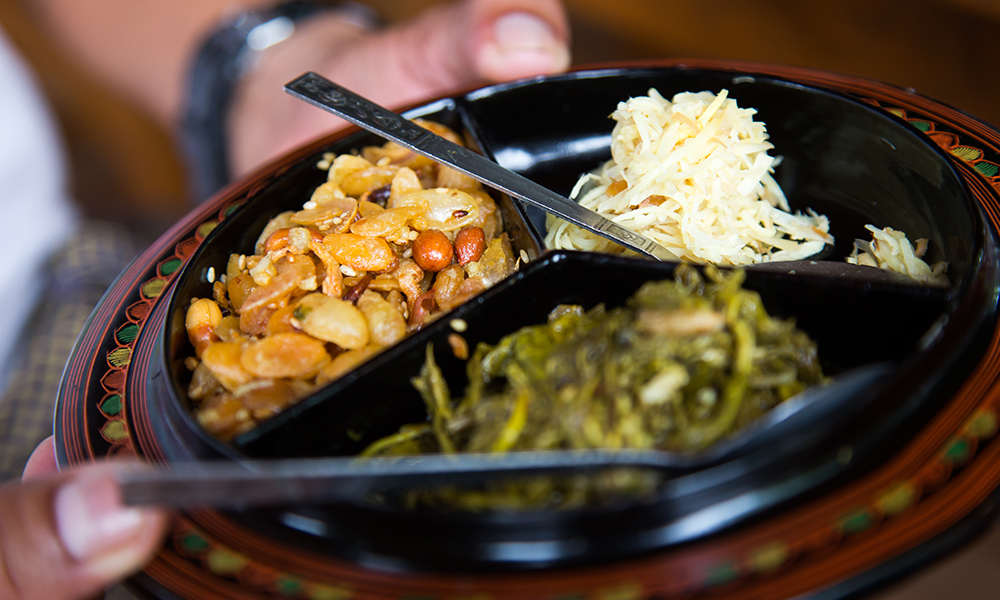
Specifically, you eat with your right hand. But that doesn’t mean you can be messy about it. In fact, there is an artful dexterity in how Myanmar people shape their rice into bite-size balls with just their fingertips to mix with the array of shared dishes, and savour with delicate relish.
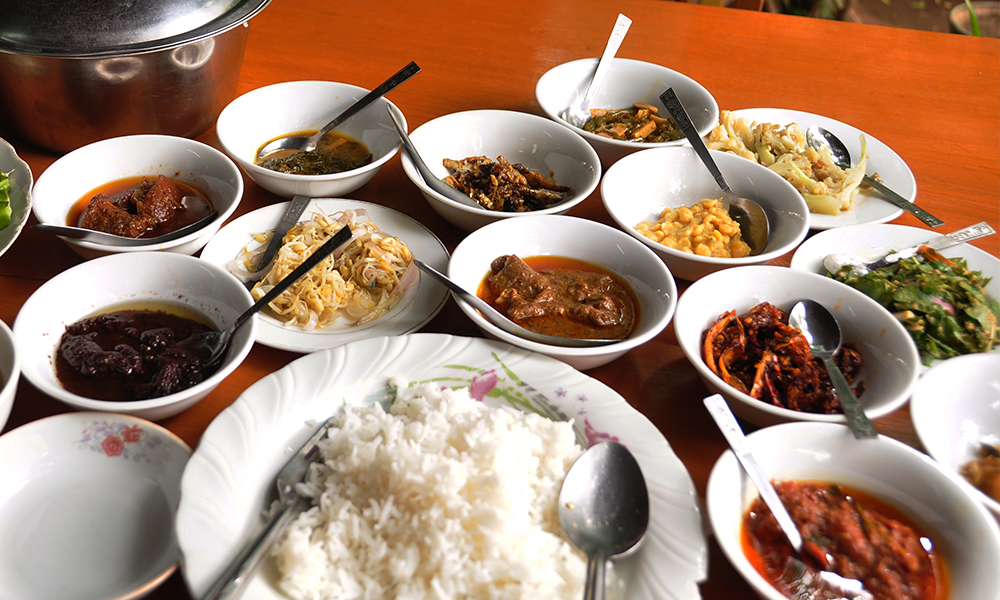
The Myanmar flavour palate favours the savoury, sour and spicy, but every region from the northern inland of Upper Myanmar, to the southern deltas and long coastline of Lower Myanmar has their own signature cuisines.
Generally speaking, Upper Myanmar favours glutinous rice, meats, poultry and beans, and uses more herbs than spices. Freshwater fish and shrimps from the lush rivers in the regions are also widely popular.
Meanwhile, Lower Myanmar prefers long-grain white rice, has a deep love for their abundance of fresh seafood, as well as a must-have seasoning paste called Ngapi made of fermented fish or shrimp, with an intensely savoury, funky and tangy taste. Ngapi is commonly used with herbs and aromatics to flavour dishes, sauces, condiments and salads.
Upper Myanmar has their own Ngapi variants as well, though more commonly made of fermented soybeans like the Pe-Ngapi from the Shan States highland.
Besides all that, a massive range of spring rolls, prata bread, fritters, pastries and sweet snacks are also widely popular across the country. And, instead of sugar, Myanmar’s sweetness tends to come from the natural flavours of local tropical fruits, rice, grated coconut and tapioca.
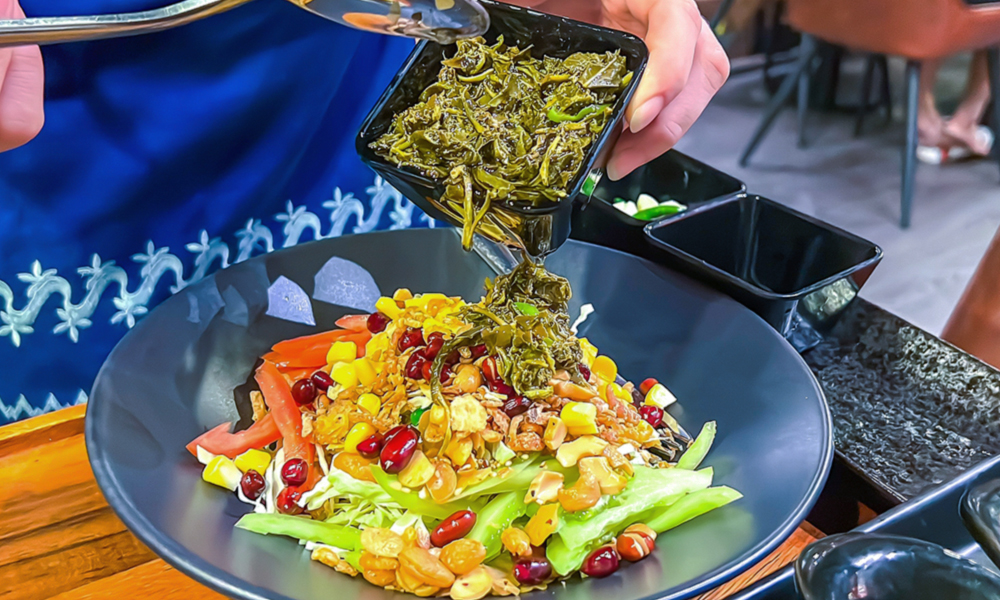
Tea is integral to Myanmar’s food culture and cuisine, with a long tea cultivation history and tradition comparable to China.
Besides an everyday drink, Myanmar also has the Laphet fermented tea leaves. Made by first steaming and sun-drying the tea leaves, then packing them into clay pots or bamboo vats, set in pits and pressed under heavy weights. The fermentation process takes around 3-4 months until the tea leaves turn into a pulp, which is then washed and drained. The result is a bracing, earthy, tangy ‘paste’. Most popularly used to flavour the Laphet Thoke salad with garlic, green chilli, tomato and lime juice.
Apart from a must-have salad in most shared Myanmar meals, the Laphet Thoke is also a customary welcome dish for guests.
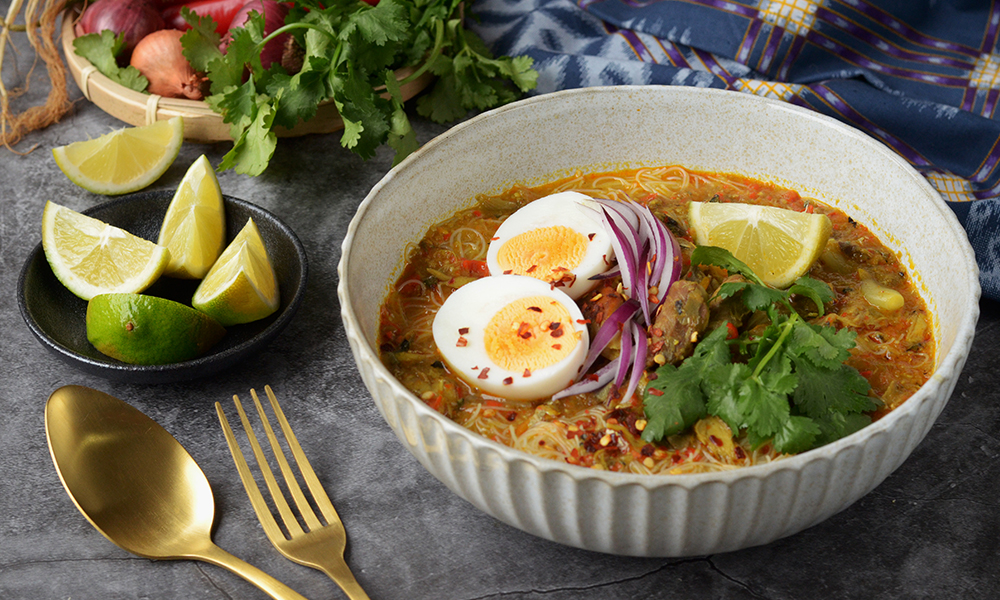
The Myanmar national dish Mohinga is a popular traditional breakfast dish, enjoyed across all of Myanmar as a common street food.
A bold, savoury, herbaceous fish broth with an alluring piquant aroma. Made with a flavouring paste of chickpea flour, rice flour, turmeric, paprika, ginger, garlic, shallot, onion, lemongrass, red chilli and fish sauce. Lathered upon soft rice vermicelli noodles and garnished with hard-boiled eggs, fried fritters, coriander, fried shallots, chilli flakes and a dash of lime juice.
Want a slurp? Try it with our easy Mohinga recipe!
New to Cambodian cuisine? Let’s explore the bold, rich and complex flavours that make Cambodian cuisine uniquely yummy!
Go local in Northern Thailand and savour the Lanna people’s Khantok tray of sensational authentic flavours!
Discover how Chinese cooking has shaped the gastronomic evolution of Thai cuisine!